The coast of Southern California has always been a draw for people looking to buy a home. They want to live in a place that’s relaxing and luxurious with a great view of the ocean.
In places like San Clemente it is easy to see why people want to live. The views are amazing the waves are great. It feels like you are on vacation all the time.. People who sell real estate know that living on the coast is not all fun and games. There are a lot of things to think about when you’re buying a home on the beach.
Over the years the environment has been changing and this has affected how people buy and sell homes on the coast. The tide is getting higher the storms are getting stronger. The sand on the beach is shifting. These are not just things to worry about in the future they are things that people have to think about every day.
If you are thinking about buying a home on the coast you need to understand what is going on with the environment and how it will affect your home. This is especially true when it comes to San Clemente beachfront property erosion.
What Is the Coastal Erosion Impact on San Clemente Real Estate
The coastal erosion impact on San Clemente real estate has added new scrutiny for buyers and lenders. While demand remains strong, increased erosion risk requires careful evaluation of bluff stability and seawall conditions, directly influencing insurance costs, financing options, and long-term beachfront home values in Orange County.
Analyzing Beachfront Home Values in Orange County
The Bluff Premium
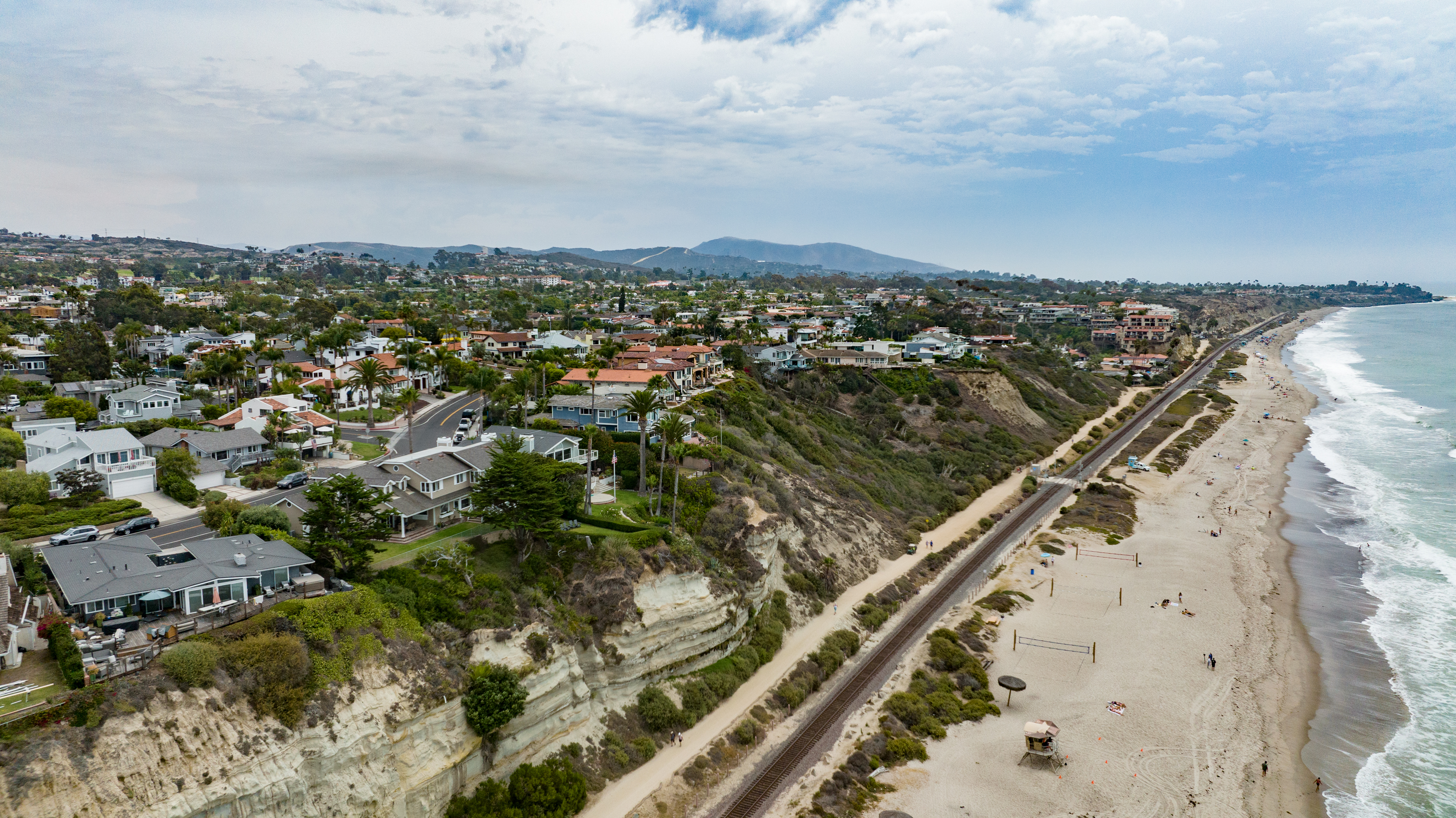
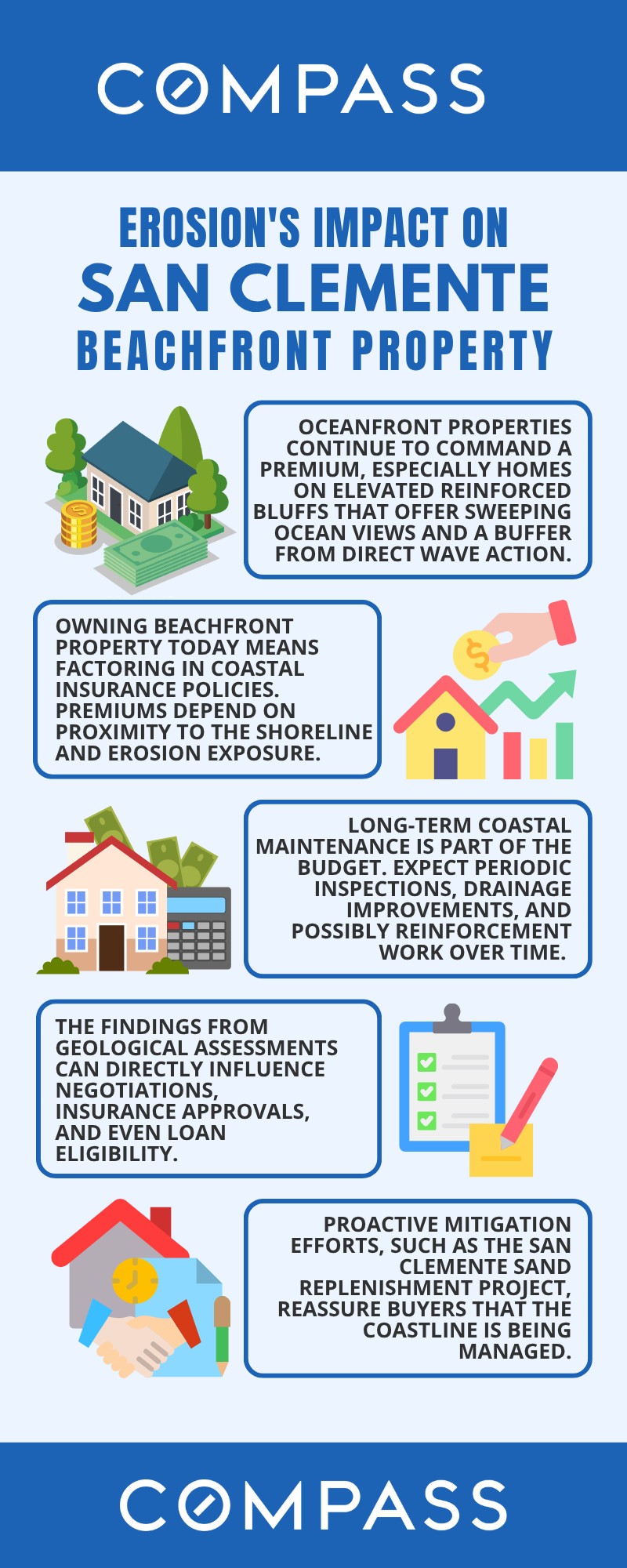
Even though erosion is a problem homes on the beach in Orange County are still really valuable. Especially homes that are on top of cliffs with great views of the ocean. These homes are not just nice to look at they also seem safer because they are higher up.
People are still willing to pay a lot of money for these homes. In fact homes on top of cliffs that are well-built and have strong foundations often keep their value well.
Things like foundations, good drainage and strong walls can make buyers feel more confident. Not all cliffs are the same. Homes on cliffs that are known to be stable and have been checked by engineers recently are more attractive to buyers and sell faster.
Insurance and Maintenance Costs
Buying a home on the beach is not about paying the price of the home. You also have to think about insurance and maintenance. Insurance for homes can be really expensive especially if the home is right on the beach and at risk of erosion.
You also have to think about maintenance. Homeowners need to check their homes fix any problems with drainage and maybe even do some reinforcement work over time. Smart buyers think about these costs when they are deciding whether or not to buy a home.
Understanding San Clemente Coastal Erosion

The Environmental Shift
San Clemente coastal erosion is caused by a combination of human activities. Winter storms are a part of the problem as they take sand away from the beach and expose the cliffs. Over time this makes the cliffs weaker.
The sea level is also rising, which means that waves can reach further and are more powerful. At the time building on the coast and making harbors has changed the way sand moves and has reduced the amount of new sand that gets to the beach.
The result is that the beaches are getting narrower the cliffs are getting steeper and homes on the beach are more at risk.
Railroad Relocation Discussions
One of the clearest signs of coastal erosion impact San Clemente real estate is that there is talk about moving the train tracks that run along the coast. Some parts of the track are at risk because the cliffs are not stable.
Local and state agencies are even thinking about moving the tracks to places. This is a reminder to homeowners that if public things like train tracks are at risk private homes are also at risk. The same things that affect property affect private property too.
The San Clemente Sand Replenishment Project 2026
Restoring the Shoreline
The San Clemente sand replenishment project is an effort to stop the beach from getting smaller. The project involves taking sand from under the water and pumping it onto the beach.
The goal is to make the beach wider and to protect the cliffs, homes and public property from the waves. This project is not a solution but it is an important part of keeping the coast safe.
Long-Term Market Confidence
From a real estate point of view, projects like this are important because they show that the government is committed to protecting the coast. Buyers want to know that the coast is being taken care of, not ignored.
In San Clemente, this commitment has helped buyers feel more confident. While erosion is still a problem the fact that something is being done about it makes buyers feel better.
The Importance of Shoreline Monitoring San Clemente, CA
Geological Surveys
Today checking the shoreline is not something you can skip. It is a part of buying a home. Many buyers hire engineers to check the cliffs and the soil before they buy.
These checks look at how stable the cliffs are what the soil is like and how the water moves. The results can affect how much you pay for the home whether you can get insurance and whether you can get a loan.
For buyers this is important because it gives them a picture of what they are getting into. For sellers having these reports can make their home more attractive to buyers.
Seawall Regulations
Seawalls can be a solution. They are regulated. The California Coastal Commission says who can build seawalls and under what conditions.
Getting permission to build a seawall can be hard and expensive. Homeowners have to show that it is necessary to ensure that it will not harm the environment and that it will work in the long term. Sometimes, permission is not given to protect the environment.
Understanding these rules is important for anyone thinking about buying a home that might need a seawall in the future.

Coastal Property Risk Comparison Table
| Property Location | Erosion Risk Level | Mitigation Strategy | Insurance Cost |
|---|---|---|---|
| Direct Beachfront | High | Seawalls, Sand Replenishment | Very High |
| Bluff-Top (Front Row) | Moderate to High | Deep Caissons, Shoreline monitoring in San Clemente, CA | High |
| Inland Coastal (Walkable) | Low | Standard Maintenance | Standard |
Key Takeaway: Invest with Eyes Wide Open
Buying a home on the coast is about lifestyle but it is also about being smart. The coast is beautiful. It comes with responsibilities that you do not have when you live inland.
By knowing about erosion in San Clemente following the replenishment project and checking the shoreline buyers can make decisions.
If you are thinking about buying or selling a home on the coast it is a good idea to get some guidance. You can call (949) 235-8614. Email pat@patparryhomes.com to talk about your goals.
Whether you are worried about erosion or just looking for a home on the coast having some expert help can make a big difference.
Frequently Asked Questions
It does not usually affect property taxes directly. It can affect the local budget in the long term.
Yes. They need permission from the California Coastal Commission.
Homes that are well-prepared for erosion sell faster, while homes that are not sell more slowly.
Yes, they can. Even go up because the beach is wider and safer.
You need reports from engineers that look at the geology the stability of the cliffs and the drainage.
Yes, it can be harder because lenders are more careful when it comes to homes that’re at risk of erosion.
There are public beaches, in San Clemente and nearby cities that you can use while the project is going on.